
Tree Removal Cost (2026): DIY vs Hiring a Pro
Updated
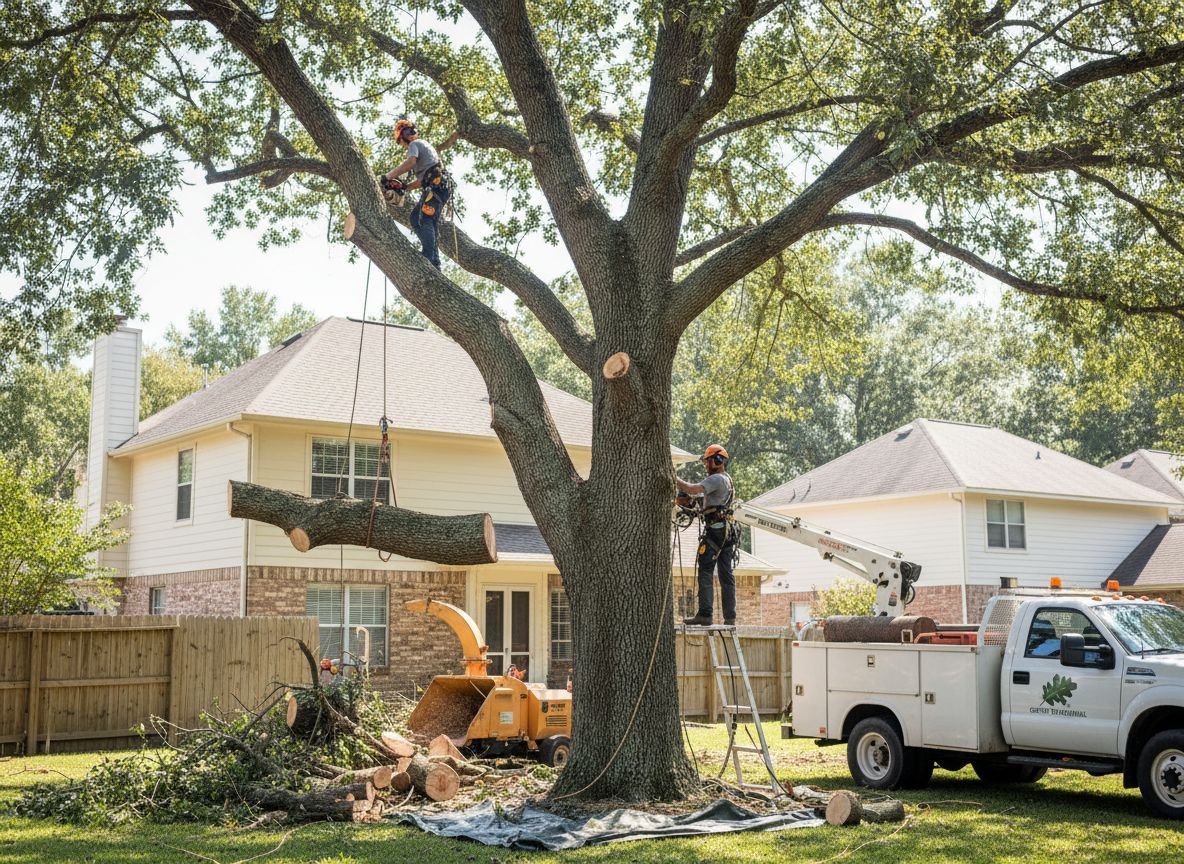
Verdict Hire a pro
Hire a pro for anything taller than about 20 ft, near a structure, or that you can't fell in a clear direction. DIY only small, isolated trees — the savings on big trees aren't worth the risk.
- DIY cost
- $430–$880
- 6–12 hours of your time · medium tree (30–60 ft)
- Pro cost
- $600–$1,600
- typical $1,000 · per tree
- Typical savings
- $345
- 35% less than a pro · ≈ $38/hour for your time
- Pros charge about $1,000 for a typical 30–60 ft tree; small trees start around $200 and very large ones can pass $5,000.
- DIY costs $400–$900 in chainsaw rental, safety gear and disposal if you own nothing but a ladder — and 6–12 hours of hard work.
- The savings look good on paper, but tree work is one of the most dangerous jobs in the country. Only DIY small, isolated trees.
- Stump removal is almost never included in a quote. Budget $100–$450 extra.
DIY vs pro at a glance
| DIY | Pro | |
|---|---|---|
| Cost per job (medium tree (30–60 ft)) | $430–$880 | $600–$1,600 |
| Cost range (all sizes) | $360–$1,050 | $200–$5,000 |
| Your time | 6–12 hours | Getting quotes, ~1–2 hours |
| Skill needed | Advanced | None |
| Injury / damage risk | High | Carried by the contractor (if insured) |
| Equipment you'd need to buy or rent | Chainsaw rental (18–20 in, gas), Chainsaw chaps, helmet with face screen, gloves, Felling wedges and axe, Rope (150 ft, 1/2 in arborist) | None |
| Permit | Sometimes — you apply | Sometimes — usually pulled by the pro |
| Best when | The tree is under ~20 ft, you can fell it whole, and there is a clear drop zone on every side | The tree is over ~30 ft, or would have to be taken down in sections |
What pros charge for removing a tree
| Job size | Low | Typical | High |
|---|---|---|---|
| Small tree (under 30 ft) — ornamental, fruit, young shade trees | $200 | $450 | $750 |
| Medium tree (30–60 ft) — mature maple, pine, most yard trees | $600 | $1,000 | $1,600 |
| Large tree (60–80 ft) — mature oak, tall pine | $1,200 | $1,800 | $2,800 |
| Very large tree (80 ft+) — often needs a crane or bucket truck | $2,000 | $3,000 | $5,000 |
What moves the price
- Height and trunk diameter
- The biggest driver. Price roughly doubles from a 30 ft tree to a 60 ft tree, and again past 80 ft.
- Proximity to structures and power lines
- Trees that must be dismantled piece by piece instead of felled whole add 30–60%. Near power lines, the utility may need to be involved.
- Access
- If a bucket truck or chipper can't reach the tree, crews work by hand and price goes up.
- Condition
- Dead, diseased or storm-damaged trees are less predictable and usually cost more, not less.
- Emergency timing
- After-storm and same-day removals commonly run 1.5–2× the normal rate.
- What's included
- Quotes vary on whether the stump, haul-away, and wood chipping are included. Ask.
Common add-ons
| Add-on | Typical cost |
|---|---|
| Stump grinding | $100–$450 |
| Log splitting / firewood cutting | $75–$200 |
| Debris haul-away (if not included) | $50–$200 |
| Crane or bucket truck | $300–$1,500 |
What it costs to do it yourself
Small tree (under 30 ft): $360–$710 and 3–6 hours
| Item | Cost | Note |
|---|---|---|
| Chainsaw rental (18–20 in, gas) | $60 ($60/day) | Rental · or buy for about $250 |
| Chainsaw chaps, helmet with face screen, gloves | $120 | Purchase · not optional — chainsaw injuries average 110 stitches |
| Felling wedges and axe | $40 | Purchase |
| Rope (150 ft, 1/2 in arborist) | $60 | Purchase |
| Extension ladder | $200 | Purchase · most homeowners already own this |
| Pole saw | $90 | Purchase · most homeowners already own this |
| Fuel, bar oil, spare chain | $30 | Materials |
| Disposal | $50–$250 | Dump fees, haul-away or bagging |
| Permit | $0–$150 | Many cities require a permit for trees above a set trunk diameter (often 6–12 in), and some protect specific species regardless of size. |
| Total (own common tools) | $360–$710 | typical $535 |
| Total (own nothing) | $650–$1,000 | buying every tool listed |
Medium tree (30–60 ft): $430–$880 and 6–12 hours
| Item | Cost | Note |
|---|---|---|
| Chainsaw rental (18–20 in, gas) | $90 ($60/day) | Rental · or buy for about $250 |
| Chainsaw chaps, helmet with face screen, gloves | $120 | Purchase · not optional — chainsaw injuries average 110 stitches |
| Felling wedges and axe | $40 | Purchase |
| Rope (150 ft, 1/2 in arborist) | $60 | Purchase |
| Extension ladder | $200 | Purchase · most homeowners already own this |
| Pole saw | $90 | Purchase · most homeowners already own this |
| Fuel, bar oil, spare chain | $45 | Materials |
| Disposal | $75–$375 | Dump fees, haul-away or bagging |
| Permit | $0–$150 | Many cities require a permit for trees above a set trunk diameter (often 6–12 in), and some protect specific species regardless of size. |
| Total (own common tools) | $430–$880 | typical $655 |
| Total (own nothing) | $720–$1,170 | buying every tool listed |
Large tree (60–80 ft): $500–$1,050 and 10–20 hours
| Item | Cost | Note |
|---|---|---|
| Chainsaw rental (18–20 in, gas) | $120 ($60/day) | Rental · or buy for about $250 |
| Chainsaw chaps, helmet with face screen, gloves | $120 | Purchase · not optional — chainsaw injuries average 110 stitches |
| Felling wedges and axe | $40 | Purchase |
| Rope (150 ft, 1/2 in arborist) | $60 | Purchase |
| Extension ladder | $200 | Purchase · most homeowners already own this |
| Pole saw | $90 | Purchase · most homeowners already own this |
| Fuel, bar oil, spare chain | $60 | Materials |
| Disposal | $100–$500 | Dump fees, haul-away or bagging |
| Permit | $0–$150 | Many cities require a permit for trees above a set trunk diameter (often 6–12 in), and some protect specific species regardless of size. |
| Total (own common tools) | $500–$1,050 | typical $775 |
| Total (own nothing) | $790–$1,340 | buying every tool listed |
Very large tree (80 ft+): $500–$1,050 and 16–30 hours
| Item | Cost | Note |
|---|---|---|
| Chainsaw rental (18–20 in, gas) | $120 ($60/day) | Rental · or buy for about $250 |
| Chainsaw chaps, helmet with face screen, gloves | $120 | Purchase · not optional — chainsaw injuries average 110 stitches |
| Felling wedges and axe | $40 | Purchase |
| Rope (150 ft, 1/2 in arborist) | $60 | Purchase |
| Extension ladder | $200 | Purchase · most homeowners already own this |
| Pole saw | $90 | Purchase · most homeowners already own this |
| Fuel, bar oil, spare chain | $60 | Materials |
| Disposal | $100–$500 | Dump fees, haul-away or bagging |
| Permit | $0–$150 | Many cities require a permit for trees above a set trunk diameter (often 6–12 in), and some protect specific species regardless of size. |
| Total (own common tools) | $500–$1,050 | typical $775 |
| Total (own nothing) | $790–$1,340 | buying every tool listed |
Hidden costs of DIY
- Injury
- Tree work is consistently among the deadliest occupations in the U.S. Chainsaw and falling-limb injuries are the top DIY risks; a single ER visit erases any savings.
- Property damage
- A misjudged fall onto a roof, fence, car or neighbor's property costs far more than the removal would have. Homeowner's insurance may not cover self-inflicted damage.
- Utility lines
- Contact with a power line can be fatal. Utilities will often remove or trim trees threatening their lines for free — call before doing anything.
- The stump
- DIY felling leaves a stump. Grinding it yourself means a $150–$300/day rental; digging it out is a full day of hard labor.
- Disposal volume
- A medium tree produces a surprising amount of debris — often a full pickup load or more. Chipper rental runs about $150/day.
When to DIY and when to hire
DIY makes sense when
- The tree is under ~20 ft, you can fell it whole, and there is a clear drop zone on every side
- It's nowhere near your house, a fence, a road or overhead lines
- You already own a chainsaw and proper protective gear, or have used one before
- You have a plan for the stump and the debris
Hire a pro when
- The tree is over ~30 ft, or would have to be taken down in sections
- It could reach a structure, a neighbor's property, or power lines if it fell wrong
- It's dead, leaning, hollow or storm-damaged (unpredictable failure)
- Your city requires a permit or a licensed arborist
Why tree removal is different from most DIY jobs
Most DIY-vs-pro decisions come down to money and time. Tree removal adds a third variable that dominates the other two: the cost of getting it wrong is catastrophic, not inconvenient. A tree that falls the wrong way lands on a roof, a car, a fence or a person. Logging and tree work sit near the top of the Bureau of Labor Statistics’ fatal-occupational-injury list every year, and those are professionals with training and equipment.
That’s why the verdict on this page is stricter than for, say, lawn mowing. The money math genuinely favors DIY for a small tree. It just isn’t the whole story.
How pros price the job
A tree crew’s price is mostly labor and equipment time. A medium tree with a clear drop zone is a two- or three-person crew for a morning; the same tree wedged between a house and a garage is a full day of roping down sections one at a time, and the quote reflects that. Height, access, and proximity to anything valuable are the three questions every estimator is answering when they walk your yard.
Get three quotes and make sure each one states what’s included — haul-away, chipping, and the stump are the usual gaps.
What DIY actually involves
For a small tree with room to fall: notch the trunk on the fall side, back-cut from the opposite side, drive wedges, and get out of the way along a pre-planned escape route. Then limb and buck the downed tree, drag or chip the brush, and deal with the stump. Our DIY tree removal guide walks through it step by step, including the point at which you should stop and call someone.
For anything that has to come down in sections — because there’s no room to fell it whole — you’re doing climbing or aerial work. That’s not a DIY category on this site.
Run your own numbers. The tree removal cost calculator prices it both ways: as DIY, with the tools you already own and a value on your time, or as a pro job at a low, typical or high quote with the add-ons that apply.
Frequently asked questions
How much does it cost to remove a tree?
Professional tree removal costs $200 to $5,000 depending mostly on height. A small tree under 30 ft runs $200–$750, a medium 30–60 ft tree $600–$1,600, and a large 60–80 ft tree $1,200–$2,800. Trees over 80 ft or near structures can exceed $3,000.
Is it cheaper to cut down a tree yourself?
In cash, usually yes: chainsaw rental, safety gear and disposal come to $400–$900 for a medium tree versus about $1,000 for a pro. But the gap narrows fast if you have to rent a chipper or stump grinder, and the injury and property-damage risk makes DIY a poor bet for anything over about 20 ft.
Do I need a permit to remove a tree on my property?
Often, yes. Many cities and counties require a permit for trees above a set trunk diameter — commonly 6 to 12 inches measured at chest height — and some protect specific species regardless of size. Permits usually cost $0–$150. Check with your local planning department before cutting.
Does tree removal include the stump?
Usually not. Most quotes cover felling the tree and hauling away the wood; stump grinding is a separate line item that adds $100–$450. Ask specifically what's included before you agree to a price.
Will the power company remove a tree for free?
If a tree threatens their lines, many utilities will trim or remove it at no charge, because it's cheaper than an outage. Call your utility before doing anything near a power line — contact with a line can be fatal.
How much does tree removal cost per hour?
Tree services rarely bill hourly to homeowners, but for reference a crew with equipment costs roughly $150–$300 per hour of crew time, and most quotes are built from an estimate of that. Expect $200–$750 total for a small tree that takes an hour or two, and $1,000+ for a medium tree that needs a half-day.
How much does tree removal cost per foot?
As a rough rule, $10–$25 per foot of height for a straightforward removal. A 40 ft tree at $15/foot is $600; the same tree beside a house that has to be dismantled in sections might be $25/foot or more. It's a planning number, not how pros actually quote.
How much does it cost to remove a small tree?
Small trees under 30 ft cost $200–$750 to remove, typically around $450. Ornamental trees, fruit trees and young shade trees fall here. This is also the only tier where DIY is realistic for most homeowners.
How much does it cost to remove a large tree?
Large trees 60–80 ft tall cost $1,200–$2,800, typically around $1,800. Very large trees over 80 ft run $2,000–$5,000 or more, especially if a crane is needed to lift sections over a house. Access and proximity to structures can push a large removal past $5,000.
How much does it cost to remove a palm tree?
Palm tree removal costs $200–$1,500 depending on height. Palms under 30 ft run $200–$500; tall palms of 60 ft+ can reach $1,200–$1,500. Palms are lighter and simpler to fell than hardwoods, but the fronds and trunk are hard to chip and disposal fees are often higher.
How much does it cost to remove a pine tree?
Pine removal costs $200–$2,500 depending on height, similar to other species. Pines grow tall and thin, so a 60 ft pine is common in yards and costs $1,000–$1,800. Dead pines (from beetles or drought) are brittle and unpredictable and often cost more, not less.
How much does it cost to remove an oak tree?
Oak removal costs $300–$3,000+. Mature oaks are heavy, wide-canopied and often close to houses, which usually means sectional dismantling: expect $1,500–$3,000 for a mature oak of 50–70 ft, and more if a crane is needed. Some cities specifically protect oaks, so check permit rules.
How much does it cost to remove a fallen tree?
Removing a tree that has already fallen typically costs $75–$500 if it's on open ground, since the dangerous part is done and the job is cutting, chipping and hauling. If it's resting on a house, car or power line, the removal is more delicate and costs $500–$2,500, and in many cases your homeowners insurance covers it.
How much does it cost to remove a dead tree?
Dead tree removal costs about the same as a live tree of the same size, and often 10–30% more. Dead wood is brittle and unpredictable, so crews work more carefully and may need a bucket truck instead of climbing. Don't wait: a dead tree only gets more dangerous and more expensive.
How much does emergency tree removal cost?
Emergency removal — same-day, after-hours, or after a storm — typically runs 1.5 to 2 times the normal rate, so $500–$1,500 for a job that would ordinarily be $300–$750. If the tree is on a structure, call your insurer first; they often have arrangements with contractors and will cover the removal.
How much does it cost to remove multiple trees?
Per-tree prices drop when a crew is already on site with equipment. Expect a 10–25% discount per additional tree of similar size, and more for clearing a lot, where pricing shifts to per-acre: roughly $2,000–$6,000 per acre for light clearing and much more for heavily wooded land.
Sources
- Tree Trimmers and Pruners (SOC 37-3013), Occupational Employment and Wage Statistics , U.S. Bureau of Labor Statistics, 2026-04
- How Much Does Tree Removal Cost? , HomeAdvisor, 2026-09
- Tree Removal Cost Guide , Angi, 2026-09
- Chainsaw and rental pricing , The Home Depot, 2026-09
- Tree Care Work: Hazards and Safety , OSHA, 2026-09
Figures last reviewed . See how we estimate.